
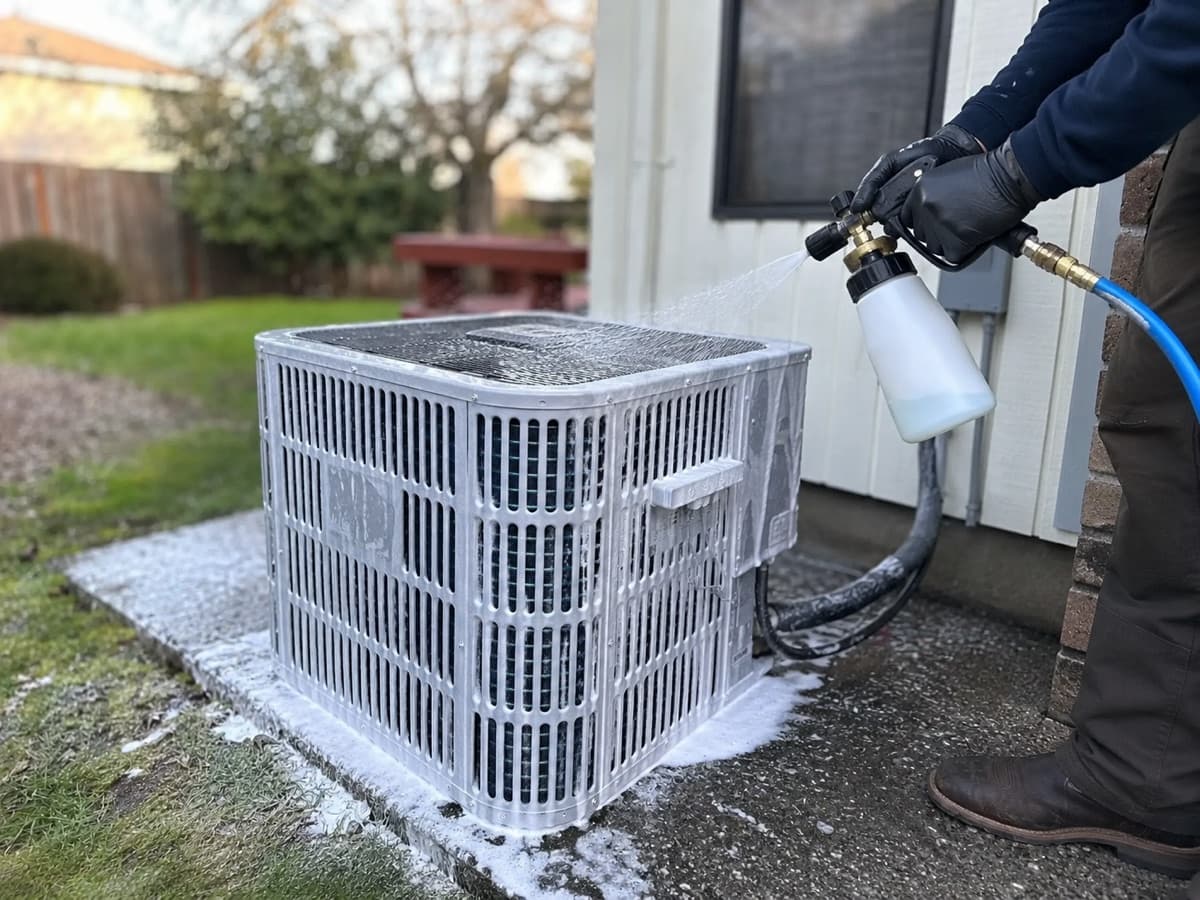
A tune-up is not just a cleaning visit. It is proof that the system was maintained, tested, and kept within manufacturer operating conditions.
That matters because major part warranties can be denied when failures are tied to neglect, dirty coils, low airflow, improper charge, or lack of maintenance documentation.
Check these first
What you can safely check before calling
Keep maintenance invoices
Save the service report each year. The date, equipment model, and checklist help prove the system was maintained.
Replace filters on schedule
Filter neglect is one of the easiest ways to damage airflow and create avoidable warranty trouble.
Register new equipment
Many manufacturers require registration after installation to receive the full warranty term.
Schedule before peak season
AC in spring and furnace in fall gives time to catch issues before heavy use.
Likely repair causes
What usually needs a technician
Electrical testing
Weak capacitors, pitted contactors, loose connections, and high amp draw can be caught before a failure.
Airflow verification
Dirty filters, blocked coils, or duct restriction can shorten motor, compressor, and heat exchanger life.
Refrigerant and combustion checks
AC and heat pumps need correct refrigerant performance. Gas furnaces need safe combustion and venting.
Written documentation
A real tune-up leaves a report you can reference later, not just a sticker on the equipment.
Call if you see this
When to stop troubleshooting and schedule service
- You cannot find maintenance records for the system.
- You bought a home and do not know the equipment history.
- The system is still under parts warranty.
- You want fewer surprise breakdowns during peak weather.